Modernization
The U.S. is rebuilding its air traffic control system. Most airports aren't included.




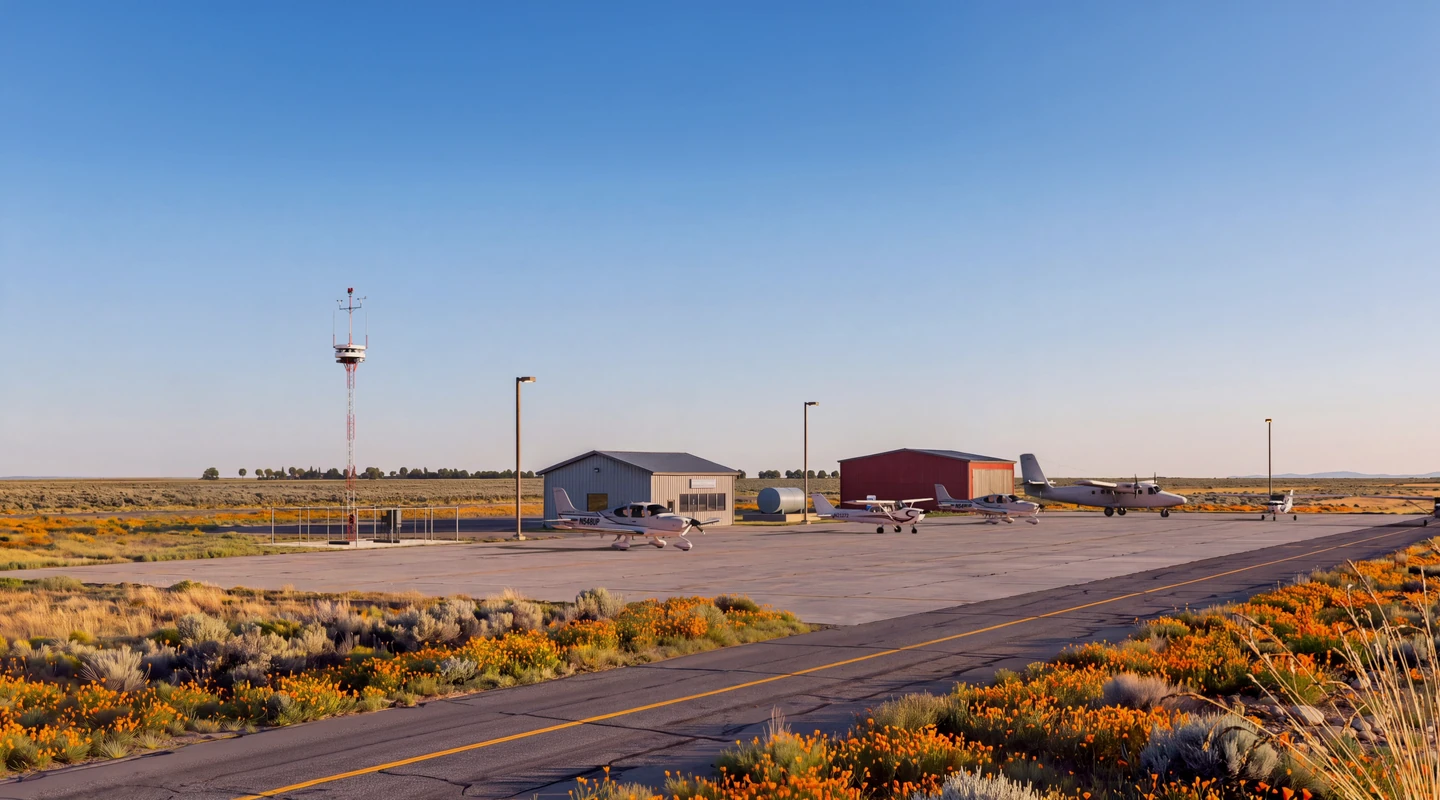
About 520 airports have a control tower. Roughly 5,000 public-use airports do not. Digital towers will help fill a critical gap in the national airspace system.
Modernizing air traffic control means more than rebuilding what already exists. It means carrying tower service all the way to the farthest field.
-
Upgrade existing infrastructure
Strengthen the networks, equipment, and facilities that support air traffic control system.
-
Extend access to tower services
Develop practical ways to serve airports where a conventional tower may be difficult to build, maintain, or staff.

Where there is no tower, pilots coordinate among themselves. There is no controller sequencing traffic, confirming the runway is clear, or coordinating the response when something goes wrong.
Pilots announce their positions on a common frequency and keep track of nearby traffic from what they can see and hear. It is a workable system, but it has hard limits.
5,146
Airports with no control tower
~10%
Of public-use airports have tower service
0.3%
Of the national program is aimed at airports with no tower
~11,000
Certified controllers, against a target of 12,563
Every airport wants a tower. Few can justify one at the current cost. New towers are rarely built.
A conventional tower costs $10 million or more to build and requires at least three full-time controllers to operate.
For airports handling low flight volumes, the benefit-cost analysis simply doesn't pencil out.
-
Coverage
About 520 U.S. airports have a control tower. Roughly 5,000 public-use airports operate without one, leaving a significant portion of the national airspace system without dedicated on-site air traffic control.
-
Cost
Traffic at small airports rarely justifies the cost. Building a conventional tower costs around $10 million, with an additional $1 million or so per year to staff and operate it.
-
Hours
Service ends when the tower closes. Most towered airports close overnight. The airport stays open and reverts to non-towered procedures until the morning.
-
Staffing
The system needs more controllers than it has. As of April 2026 the FAA had about 11,000 certified controllers against a target of 12,563, with roughly 4,000 more in training. Certification takes years.
Not just modernizing the network. Making tower services accessible.
The federal Brand New Air Traffic Control System (BNATCS) program aims to upgrade the infrastructure behind U.S. aviation: communications, radar, controller tools, and facilities.
That scope includes remote towers. The next question is how to make this approach practical for more airports.


$12.5 billionBrand New Air Traffic Control System, 2025
$36 million – 0.3%Remote tower systems, April 2026
- 1
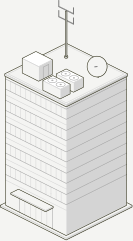
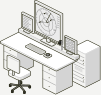
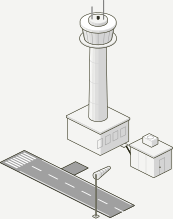
Communications
Modern connections for voice and data.
- 2
Surveillance
Updated radar and surface monitoring.
- 3
Automation
Modern tools for air traffic controllers.
Coverage is a price problem, not a policy issue
The federal Brand New Air Traffic Control System (BNATCS) program aims to upgrade the infrastructure behind U.S. aviation: communications, radar, controller tools, and facilities.
That scope includes remote towers. The next question is how to make this approach practical for more airports.
$10 millionConventional control tower, plus $1M a year to staff it


$7 millionDigital tower, first U.S. award, phase one


$0.5 millionGeneral Aviation, target price
3
Our approach: tower services, delivered from another location
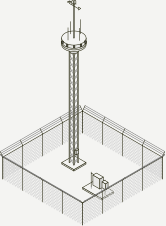
Cameras and sensors at the airport provide the view a controller would traditionally see through tower windows, streaming that picture directly to a workstation on-site or elsewhere.
The controller remains fully responsible for directing traffic and issuing clearances. What changes is simply how the airport and the controller's workplace are connected.
With the appropriate approvals and staffing, a remote center can support services for multiple airports, allowing operating models and service hours to be tailored to each deployment.
A different way to establish service
Provide airport equipment and a connected controller workplace as an alternative to building a conventional tower.
More flexibility in staffing and facilities
Locate controller workplaces where teams and supporting resources can be organized effectively.
An option for backup service
Use a suitably equipped remote facility as part of an approved contingency plan if the primary tower becomes unavailable.



What we develop
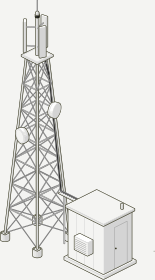
We provide tower services and air traffic control through a compact, digital system. Built for the American runways where a concrete tower can't be justified on cost or staffing.
Explore digital tower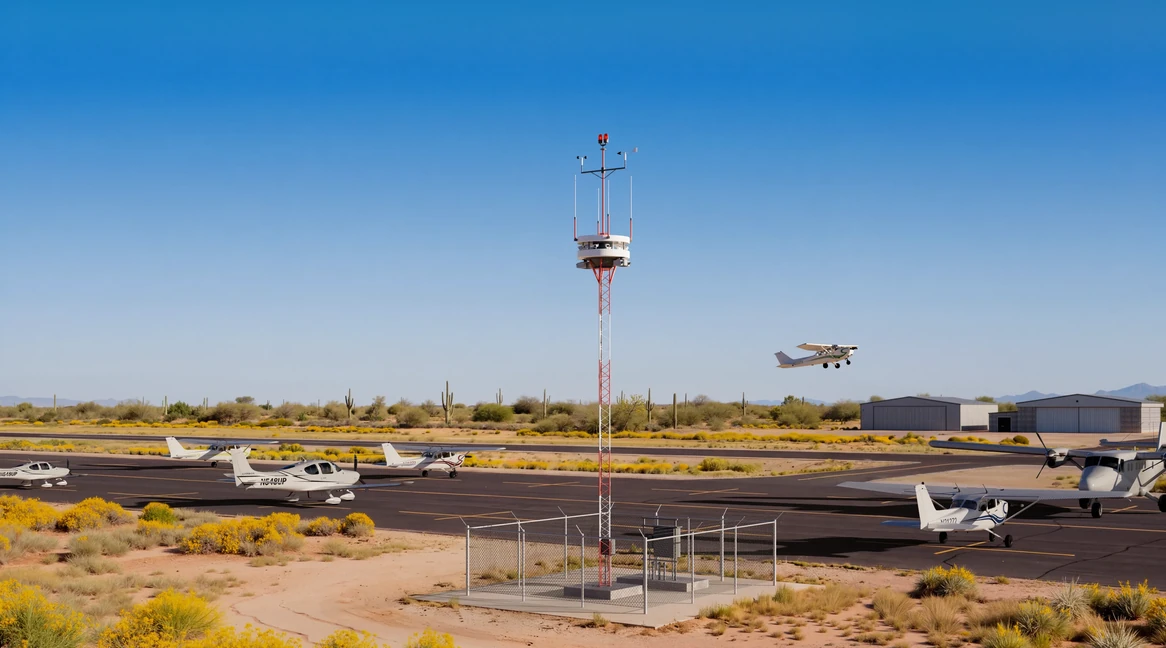


- 1
Digital tower
Sensors at the airfield for observation of the local operating environment.
- 2
Digital control center
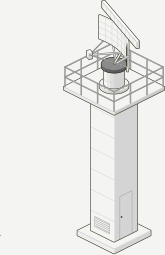
A remote workplace designed to give the controller total situational awareness.
- 3
Pilot companion app
A supporting application for pilots within the broader GA system concept.
What stays the same
Reliable power, resilient communications, certified controllers, and clear procedures are a must.
-
Service access
Sensors at the airfield for observation of the local operating environment.
-
Facility flexibility
A remote workplace designed to give the controller total situational awareness.
-
Contingency planning
A supporting application for pilots within the broader GA system concept.
4
The FAA recently developed a system design approval process for digital towers. Certification programs from other countries provide valuable baseline data as systems advance through the FAA’s evaluation and approval standards.
Airports internationally already rely on remote towers for certified air traffic control, demonstrating how the approach performs in different environments.
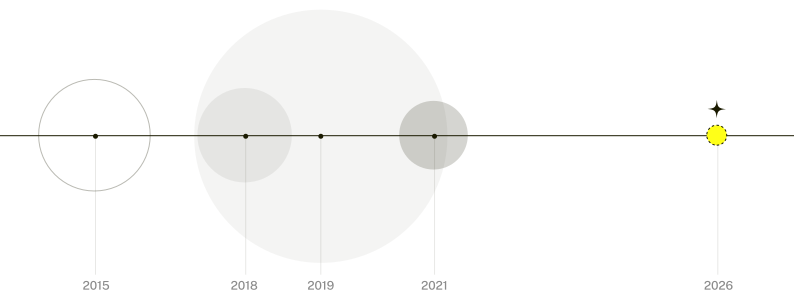
- 2015
Sweden
Sundsvall and Stockholm, 4 airports
In operational service
- 2018
Germany
Leipzig centre, 2 airports
In operational service
- 2019
Norway
Bodø centre, 14 airports
In operational service
- 2021
United Kingdom
Swanwick centre, London City
In operational service
- 2026
United States
Kenai, AK & Bartow, FL — contracted 2026
Contracted, not yet in service
Ready for service means ready as a whole system
A working installation is just one part of operational readiness. Equipment, connectivity, people, and procedures must all work together to provide reliable service at every airport.
-
System performance
Demonstrate that the equipment and situational data presented to controllers meet all applicable federal operational standards.
-
Supporting infrastructure
Plan for power, connectivity, and maintenance, detailing how service adapts if a critical system component becomes unavailable.
-
People and procedures
Provide qualified personnel, specialized operational training, standard operating procedures, and unambiguous responsibilities.
-
Approval and oversight
Complete the technical and operational reviews addressed in the FAA Digital Tower Systems framework for safety.
-
Airport fit
Assess local traffic patterns, operating needs, funding models, and the appropriate service model.
5
Making tower services accessible in every corner of the airspace
General Aviation is developing digital towers for airports where conventional towers are out of reach.
A compact airfield mast links local traffic patterns directly to remote controllers and a companion app for pilots.
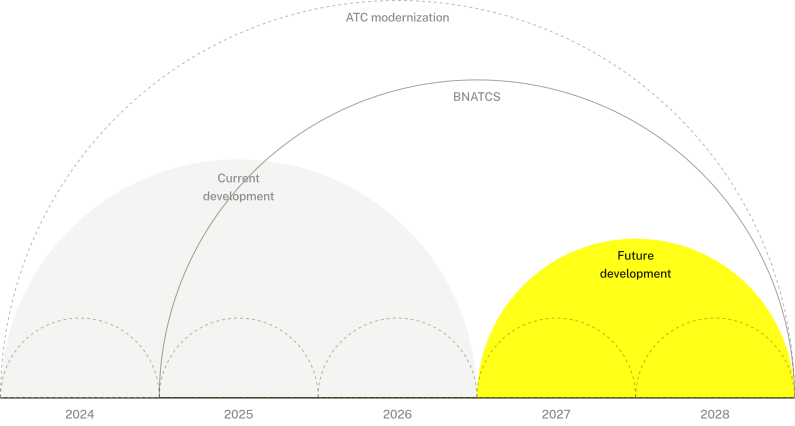
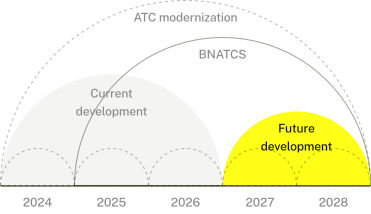
- 2024
Federal framework
Reauthorization Act advances remote tower development.
FAA
- 2025
Modernization funding
$12.5B in initial federal funding.
BNATCS
- 2026
Proposals and prototype
FAA seeks remote tower proposals. GA prepares its first demonstration installation.
FAA, GA
- 2027
Further development
Next steps depend on prototype results, engineering progress, and regulatory review.
GA
- 2028
Federal program target
FAA targets delivery of the new national ATC system.
FAA
Modernization strengthens the airfield infrastructure already in place, expanding operational capability without building costly concrete towers.
General Aviation is developing digital tower systems to bring structured air traffic oversight within reach of county runways across the U.S.